Kimberley Primary School

Computing
At Kimberley Primary & Nursery School, we’re not just teaching computing—we’re empowering the next generation of creative and critical thinkers! Through the teaching of Computing from EYFS to Key Stage 2, we aim to equip pupils with the knowledge, skills and understanding needed to become confident, creative, responsible and safe users of technology.
Our Computing curriculum is fully aligned with the National Curriculum and is delivered through the Twinkl Computing Scheme, ensuring clear progression in computer science, information technology and digital literacy across all year groups. We provide opportunities for children to develop computational thinking, problem-solving, creativity and resilience, while also preparing them for the technological demands of modern life.
We place a strong emphasis on online safety and digital wellbeing, linking our Computing curriculum closely with our PSHE curriculum and MyHappyMind programme. This supports pupils in understanding how to use technology safely, respectfully and positively, while developing emotional awareness and healthy habits around screen time and online interactions.
Our curriculum reflects and promotes our school values of being:
- Gracious – showing kindness and respect when communicating online and using shared technology responsibly
- Resilient – persevering when solving problems, debugging programs and learning new digital skills
- Empathetic – understanding how online actions affect others and promoting positive digital citizenship
- Ambitious – striving to develop new skills and use technology creatively and purposefully
- Thoughtful and Tolerant – making safe, sensible choices online and respecting differing views and experiences
We also ensure Computing supports our commitment to developing strong Oracy skills, giving pupils opportunities to explain their thinking, collaborate, present ideas and use subject-specific vocabulary confidently. Through our Rights Respecting Schools work, pupils learn about their rights and responsibilities in the digital world, including privacy, safety, respect and equality online.
By the time children leave our school, they will be digitally literate learners who can use technology safely, effectively and confidently as active participants in the wider world.
Early Years Foundation Stage (EYFS)
In EYFS, Computing is taught through the Understanding the World curriculum and continuous provision. Children begin to explore technology through play-based learning and practical experiences. They learn to:
- recognise and use simple technology in the classroom and at home
- use iPads to explore educational apps and develop independence
- understand basic instructions and sequencing through practical activities
- begin to talk about staying safe when using devices
- develop speaking and listening skills through collaborative digital tasks
This early exposure builds curiosity, confidence and responsible attitudes towards technology.
Key Stage 1
In KS1, pupils continue to use iPads to develop foundational Computing skills. They are taught to:
- understand what algorithms are and create simple programs
- use technology purposefully to create, organise and retrieve digital content
- recognise common uses of information technology beyond school
- use technology safely and respectfully and know where to go for help if something worries them online
Lessons are practical, engaging and discussion-based, supporting both Oracy and collaborative learning.
Key Stage 2
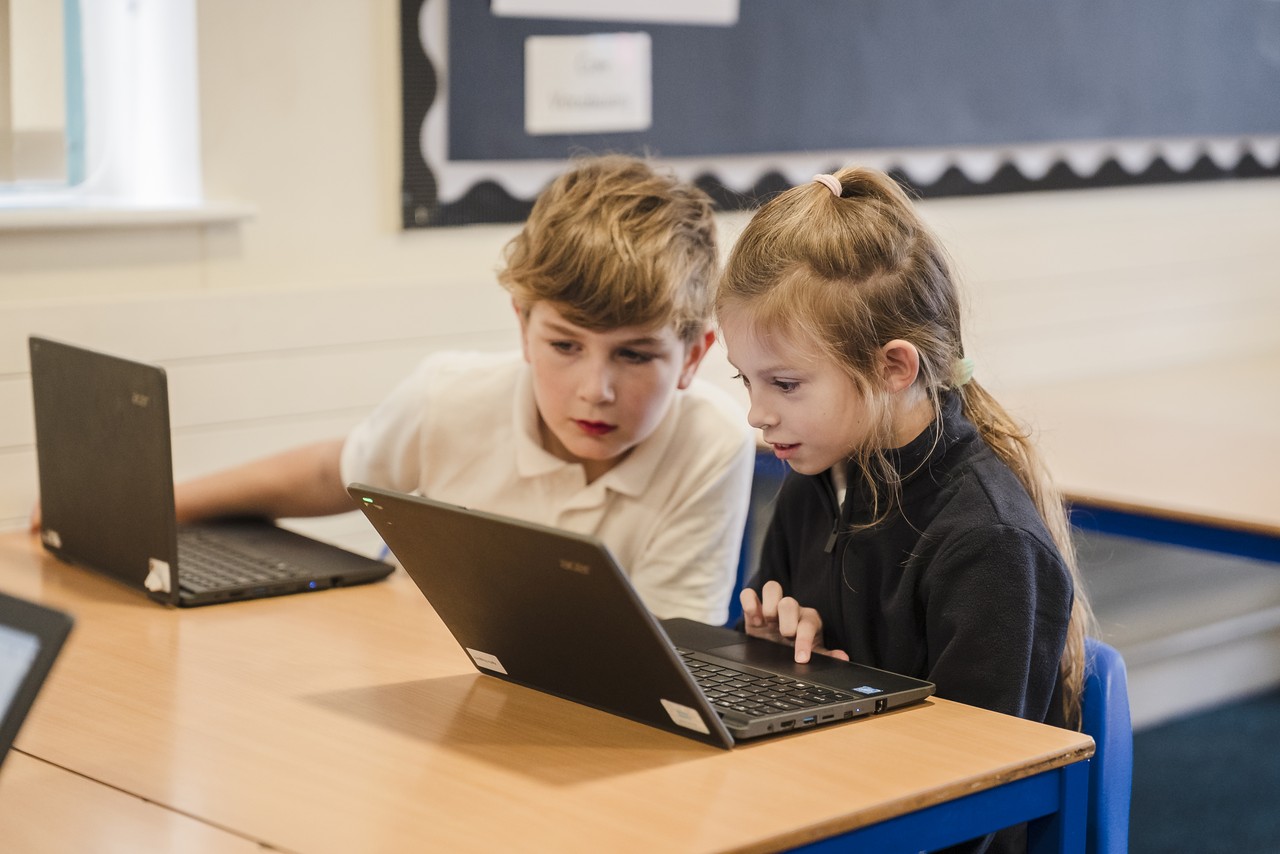
In KS2, pupils transition to using laptops, allowing them to deepen their understanding and independence across all areas of Computing. They learn to:
- design, write and debug programs
- use logical reasoning to explain how algorithms work
- understand computer networks, including the internet and online communication
- use search technologies effectively and critically evaluate digital content
- select and use software to create presentations, documents, spreadsheets and media projects
- become responsible, safe and respectful digital citizens
Online safety is revisited regularly and taught both explicitly within Computing lessons and through wider PSHE and MyHappyMind sessions.
Across the school, pupils are encouraged to work collaboratively, explain their thinking and reflect on their learning, strengthening both technical understanding and Oracy skills. Computing also supports our Rights Respecting Schools agenda by helping pupils understand digital rights, responsibilities and respectful participation in online communities.
Technology is used to enhance learning across the wider curriculum, ensuring pupils see Computing as a meaningful, relevant and valuable life skill.
At KPS, we take the approach that our pupils need to foster skills that will help them thrive in an increasingly digital world.