Kimberley Primary School

English
English Intent, Implementation, Impact statement
Intent
At Kimberley Primary and Nursery School, English — reading, writing and oracy — is the foundation of all learning. We believe strong communication skills unlock the whole curriculum and enable children to participate fully in school and in life.
We are committed to securing firm foundations in early reading, language and writing so that pupils become confident, fluent readers and effective communicators. Through high-quality texts and purposeful talk, pupils develop culturally, emotionally, intellectually and socially, gaining the knowledge and vocabulary they need to understand the world and express themselves clearly.
Our aim is for every child to leave us equipped with the literacy skills required to succeed in education and beyond as lifelong readers, writers and speakers.
Aims
Our English curriculum aims to promote high standards of language and literacy, equipping pupils with a strong command of spoken and written language while fostering a lifelong love of reading.
We aim for all pupils to:
- read fluently, accurately and with understanding
- develop a love of reading for both pleasure and information
- acquire a rich vocabulary and secure understanding of grammar and language conventions
- appreciate a wide range of high-quality literature
- write clearly and effectively for a range of purposes and audiences
- use talk confidently to explain, discuss and deepen understanding
- become articulate speakers and attentive listeners in a range of contexts
- develop as rights-respecting global citizens, using language to understand different perspectives, value diversity and engage thoughtfully with the world around them.
Our English curriculum supports the wider aims of our school by providing meaningful experiences, building cultural capital and delivering a coherent, knowledge-rich curriculum. It is shaped by our key drivers—Creativity, Possibilities and Diversity—which are reflected through enriching opportunities such as author visits, theatre experiences and engagement with the wider community.
Implementation
Phonics
At KPS we follow the FFT ‘Success for All’ Phonics programme, as a carefully structured journey that develops reading and spelling step-by-step from Nursery to Key Stage 1 and beyond. In Nursery, children begin with First Steps to Phonics, where the focus is on listening skills, rhythm, rhyme, oral blending and identifying sounds in the environment and in spoken words. This prepares children for formal phonics by building phonological awareness before introducing written letters.
In Reception and Year 1, children move into daily systematic synthetic phonics lessons which last between 20-30 minutes. They are taught a clearly sequenced set of sounds and letter patterns and learn how to blend sounds to read words and segment them to spell. The accompanying books are fully decodable and carefully matched to the sounds children know so that they can practise and experience success immediately. Regular assessment ensures children who need extra support receive rapid, targeted practice so that everyone keeps pace with the programme.
In Year 2, once children can read fluently, the focus shifts from learning to read towards reading to learn and accurate spelling through Spelling with the Jungle Club, a daily 25 minute session. This stage builds on phonics knowledge to teach spelling rules, patterns and word structures, helping children understand how the English spelling system works. Pupils continue to practise reading fluently while developing confidence in spelling a wider range of words independently. During this stage children who have not passed their phonics screening in Year 1 will receive targeted support to help them close their gaps in understanding before retaking the test at the end of year 2.
Reading and Reading for Pleasure
In Reception and year 1, a daily 20 minute reading lesson using the Success for All phonics books runs alongside the main phonics lessons further developing the children’s decoding and fluency skills. These books are sent home to parents via a web link and a QR code so practise at home can take place alongside the daily phonics and reading lessons, they also take home a second book to share at home. This book helps build inference skills and promote story discussion at home and build awareness of grammar in the text.
In year 2, children build on their learning from Success for All Phonics by following the Routes to Reading programme. This introduces the children to a variety of comprehension skills and develops their ability to understand vocabulary, find information, make predictions, summarise a text and evaluate what they have read. After an initial prediction lesson, these books are also shared with parents via a web link and a QR code. Year two children also take home a colour banded 'Rainbow Reads' book depending on their reading level.
In Key Stage 2, reading builds on the strong foundations established in Routes to Reading in Year 2. Pupils take part in three structured reading sessions each week, designed to develop fluency, understanding and a broad range of comprehension skills. Through carefully selected, high-quality texts, pupils are explicitly taught to develop their understanding of vocabulary, retrieval, inference, prediction, sequencing, summarising and explanation. Lessons are structured to provide regular opportunities for discussion, modelling and independent practice, enabling pupils to deepen their understanding of texts and articulate their thinking clearly. This consistent and progressive approach ensures that all pupils become confident, skilled readers who can engage with and respond thoughtfully to a wide range of literature.
In 2024, our school started its journey on ‘The Reading Schools Programme: Building a culture of Reading’, run by The Open University. The programme enabled us to work on building a rich reading culture and curricula that will continue to impact on our children's life chances.
Currently we promote reading for pleasure at our school by:
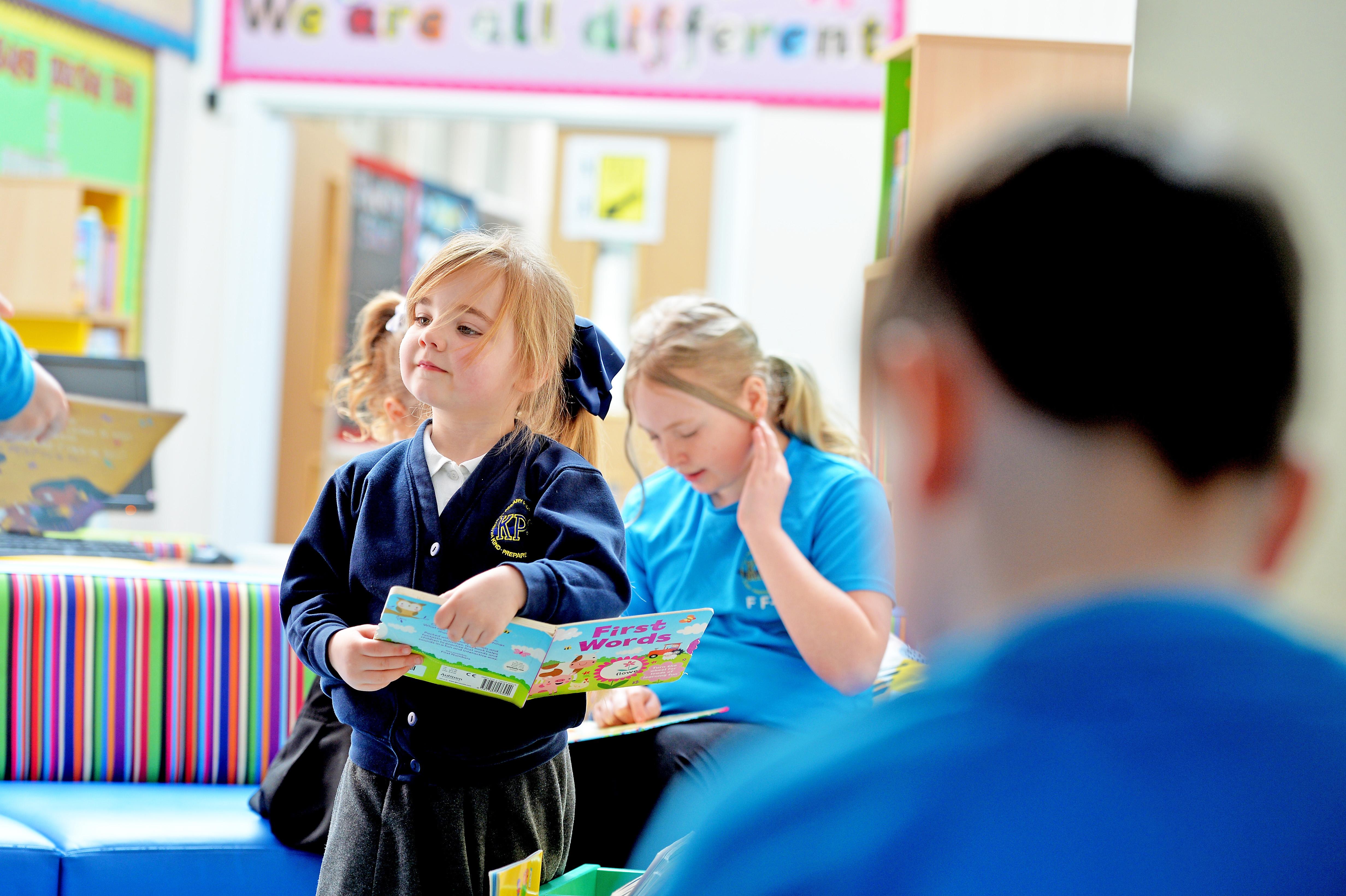
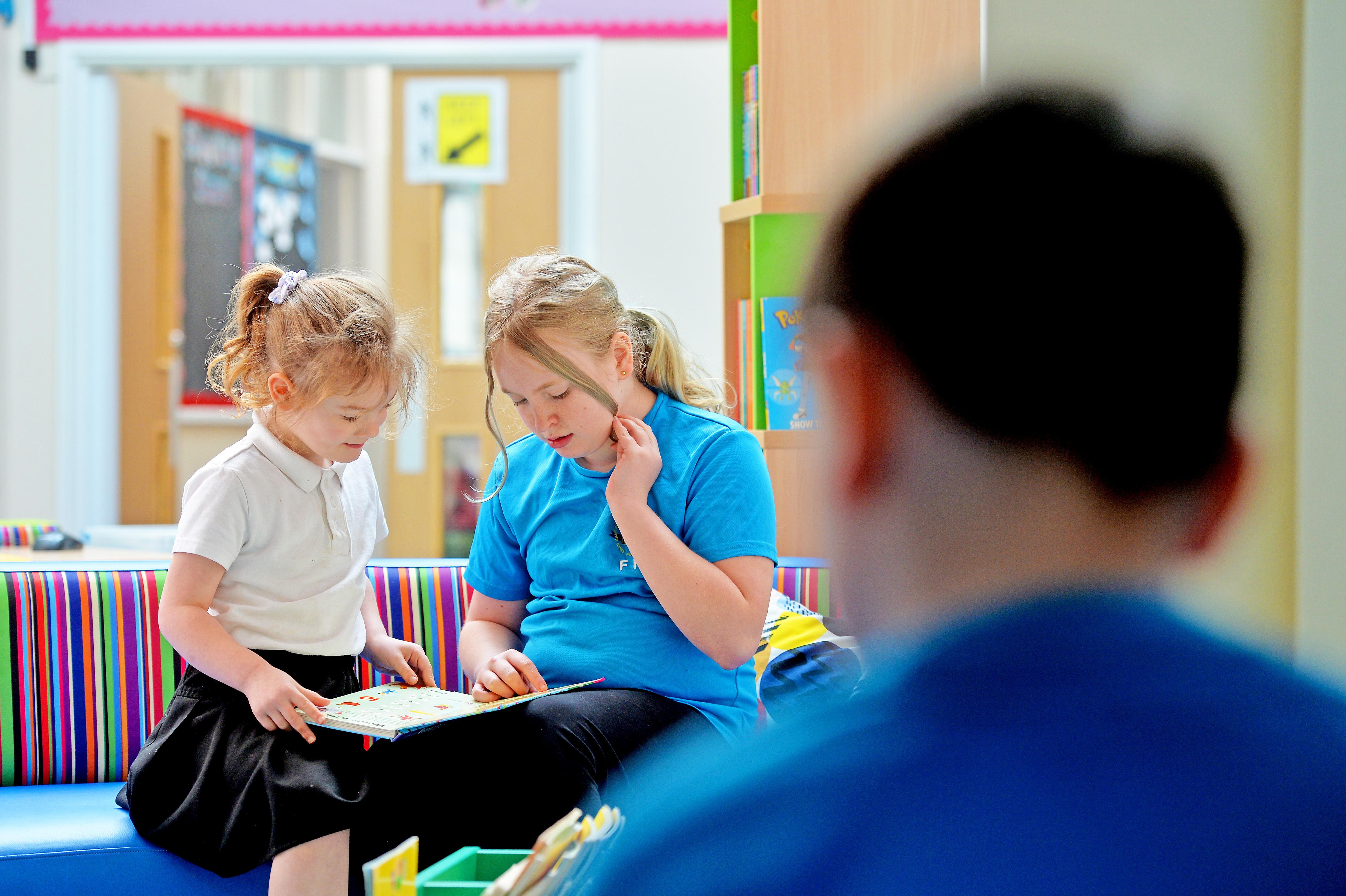
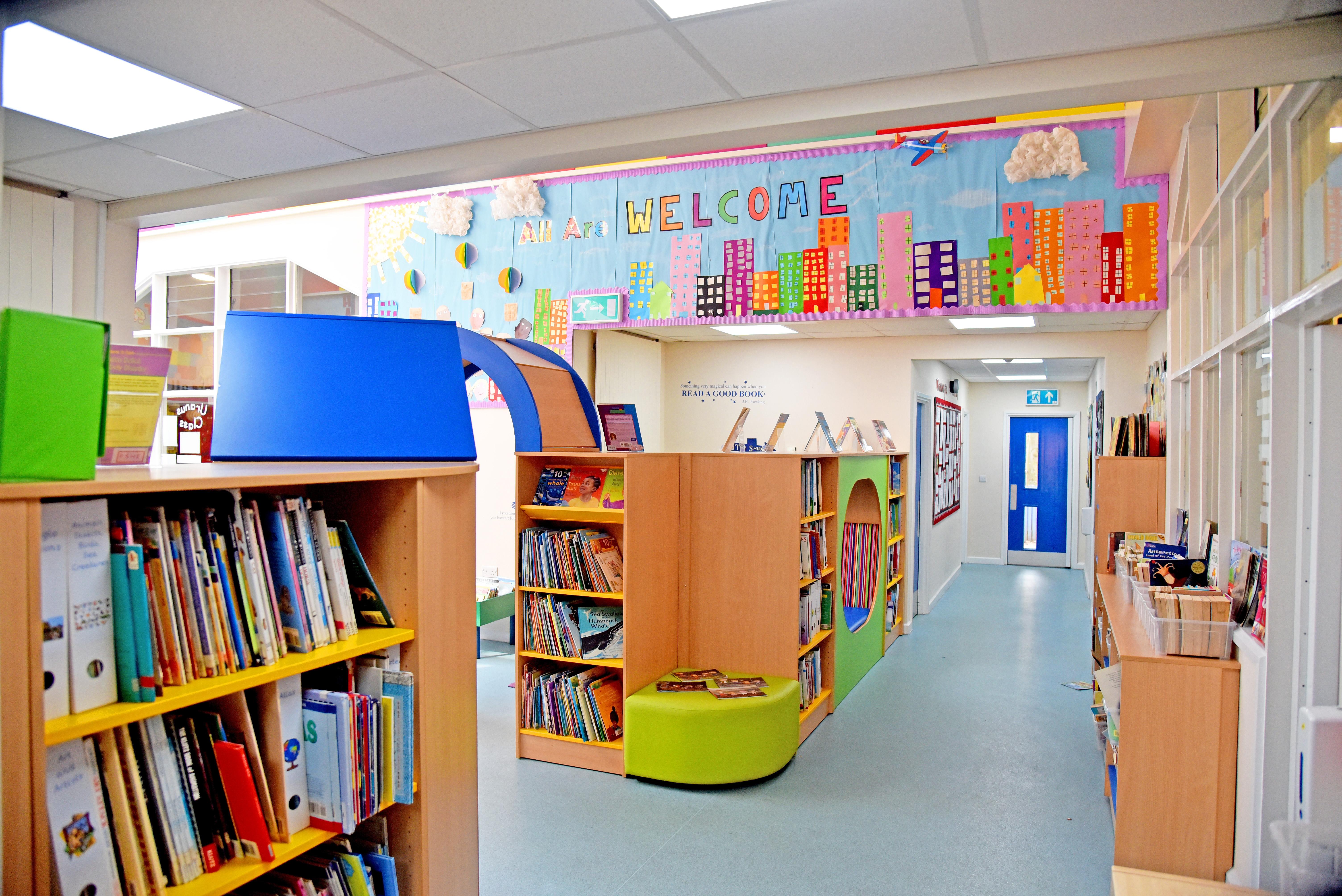
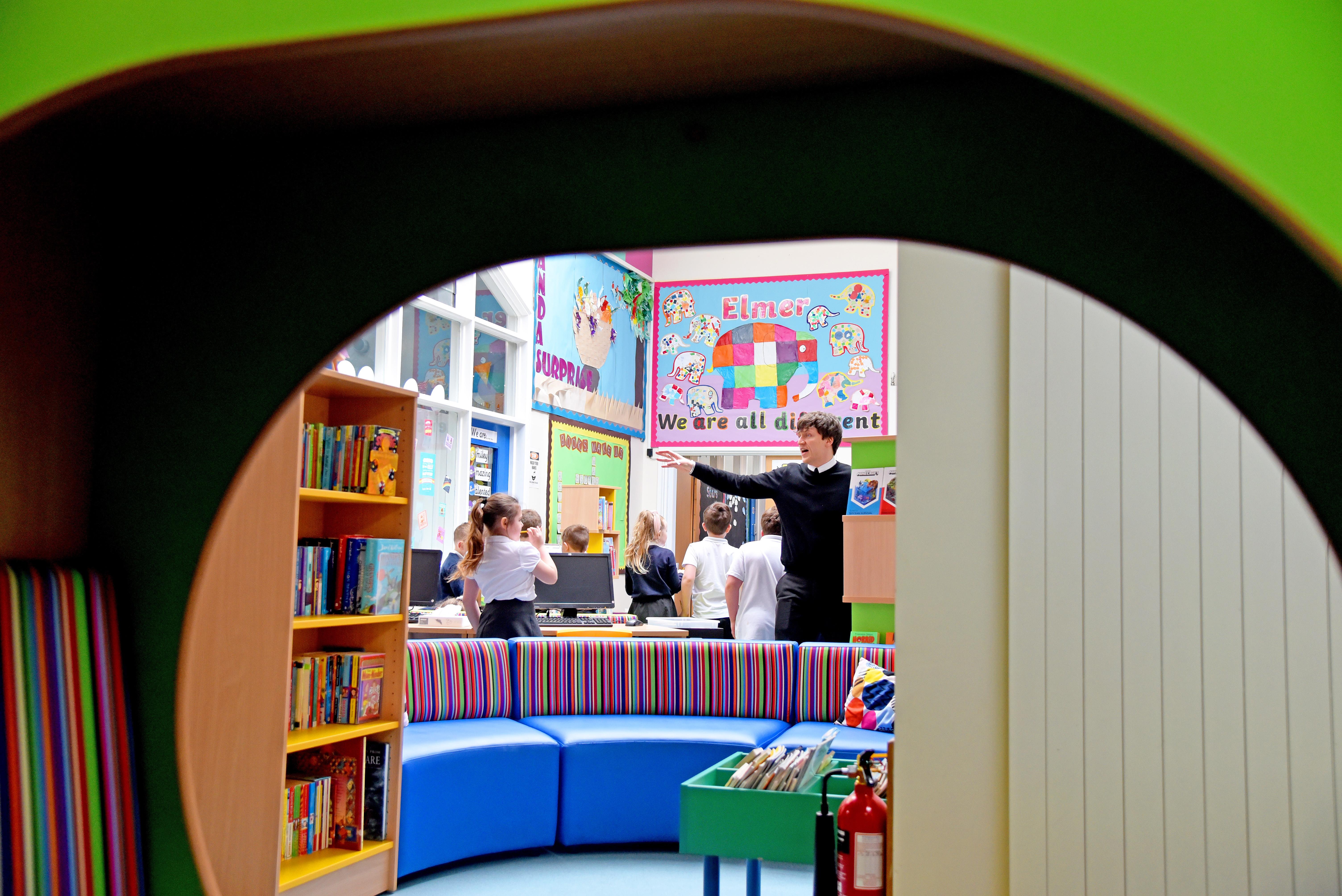
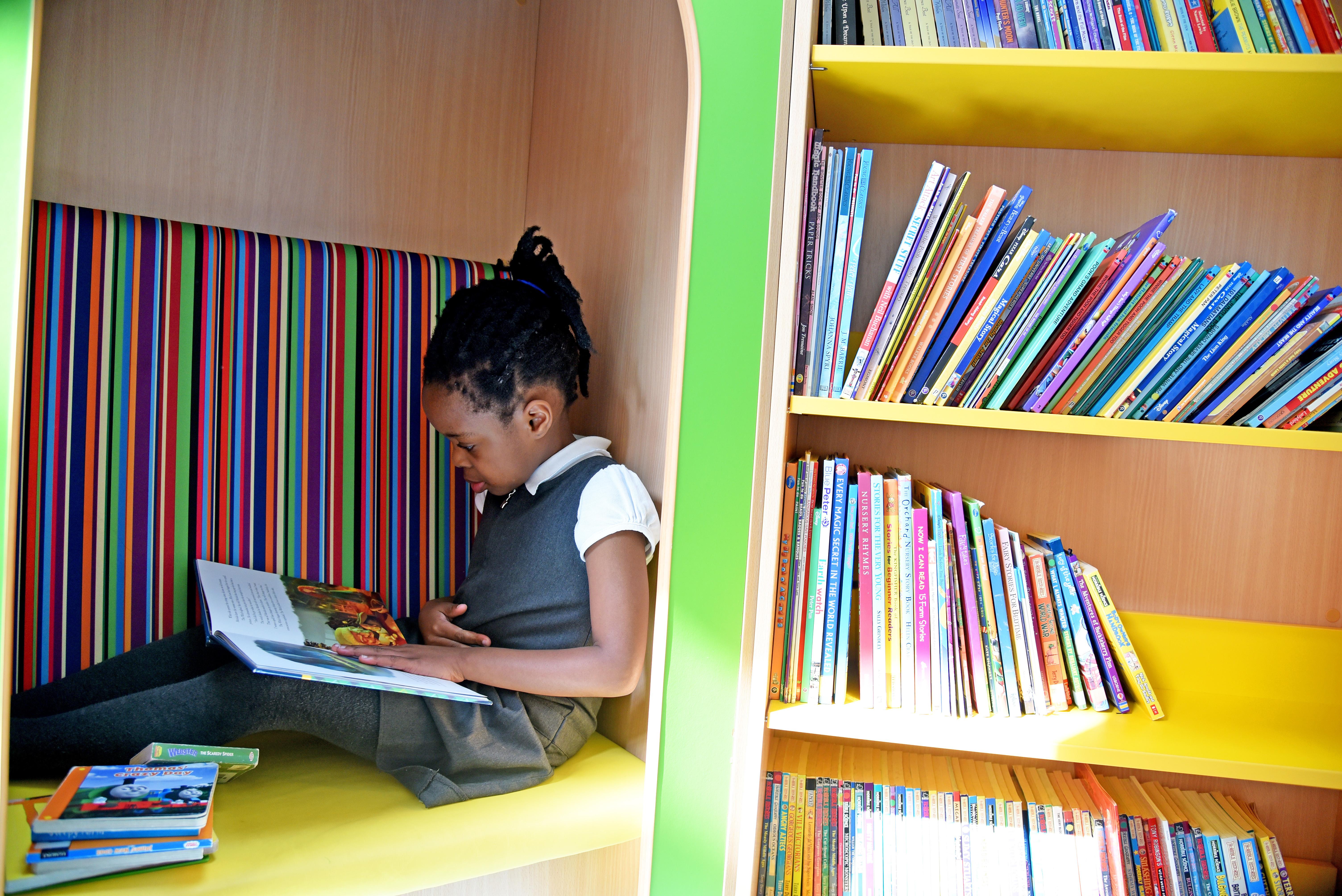
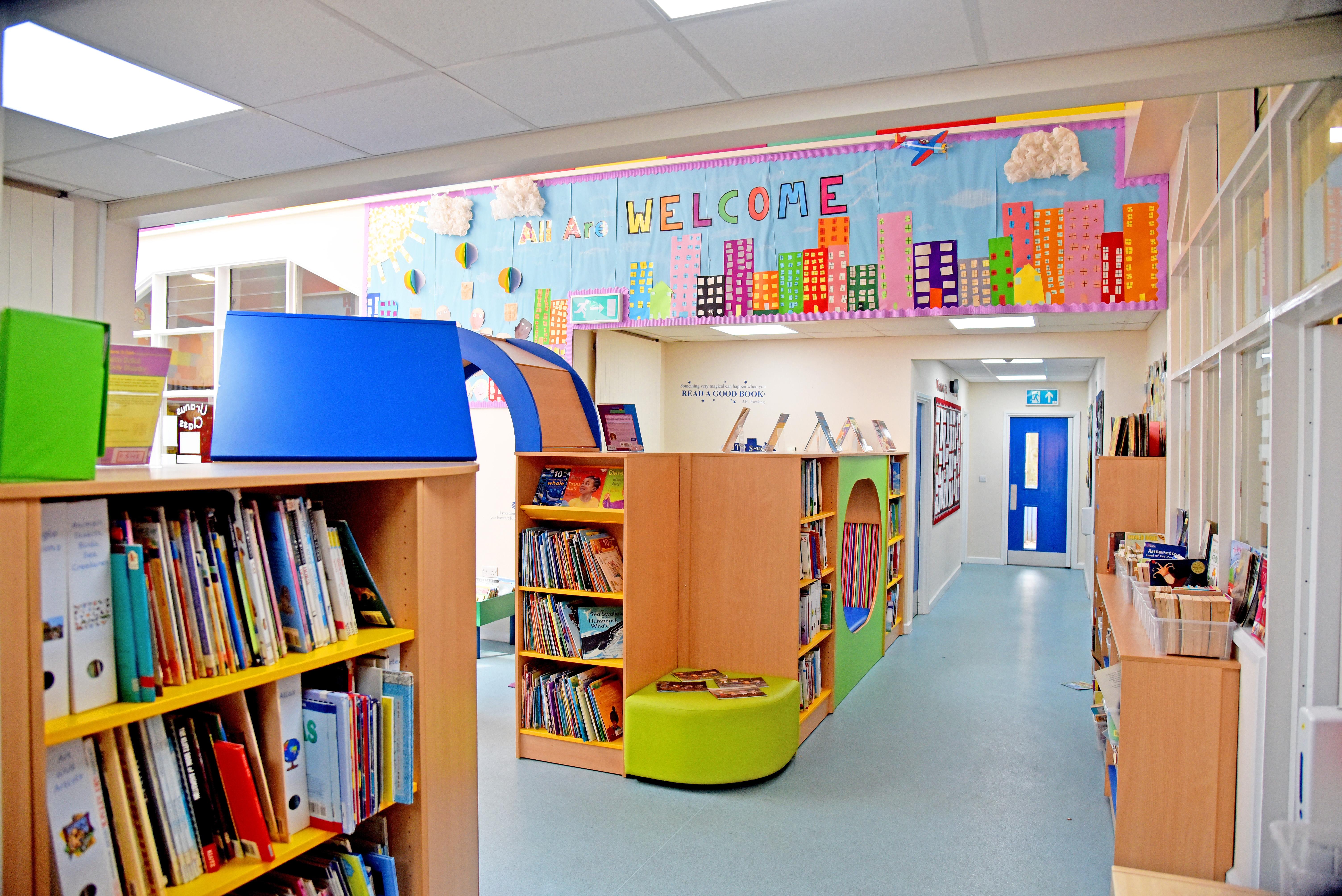
- The implementation of our new library has helped raise the profile of reading in our school. During summer 2019, the library was redeveloped and refurbished and a librarian was put in place so that children were able to borrow books using a manual system. Due to an increasingly high percentage of pupils using the library, we invested in the library management system in May 2020 so that books could be tracked and monitored more effectively. The library is now seen as a special place where children can enjoy books. Clear guidelines when using the library has ensured pupils see it as a place to come and read during lunchtime or during their allocated class slot. Our staff are regularly updating the books in our library, ensuring that the children get the opportunity to read a wide range of books from different authors. In particular, we work hard to ensure these books fit our curriculum drivers of creativity, diversity and possibilities.
- Regular special events are planned to help raise money for new books for the school library and members of the community frequently donate books too.
- Monitoring of usage of the library and targeting specific groups is regularly carried out to ensure all children are accessing the library and all are encouraged to borrow a book for pleasure alongside their AR/reading scheme book.
- Story sacks have been produced and added to our library for Early years/KS1.
- In each classroom, teachers ensure they have a special reading area, designed to encourage reading for pleasure. Within these, staff have personal libraries, with books chosen carefully to reflect and support the needs and diversity of their class, which enable pupils to experience a range of texts and authors.
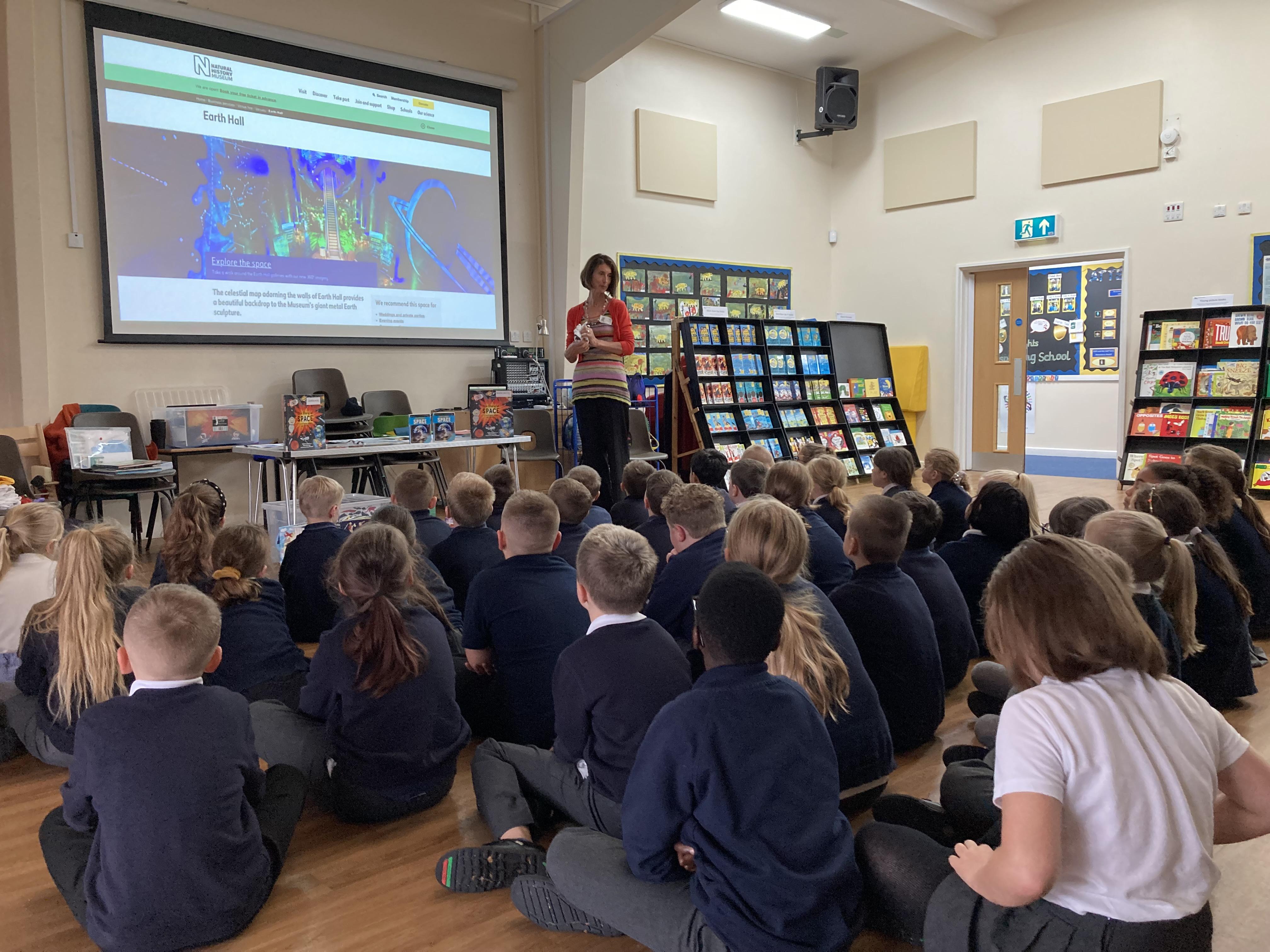
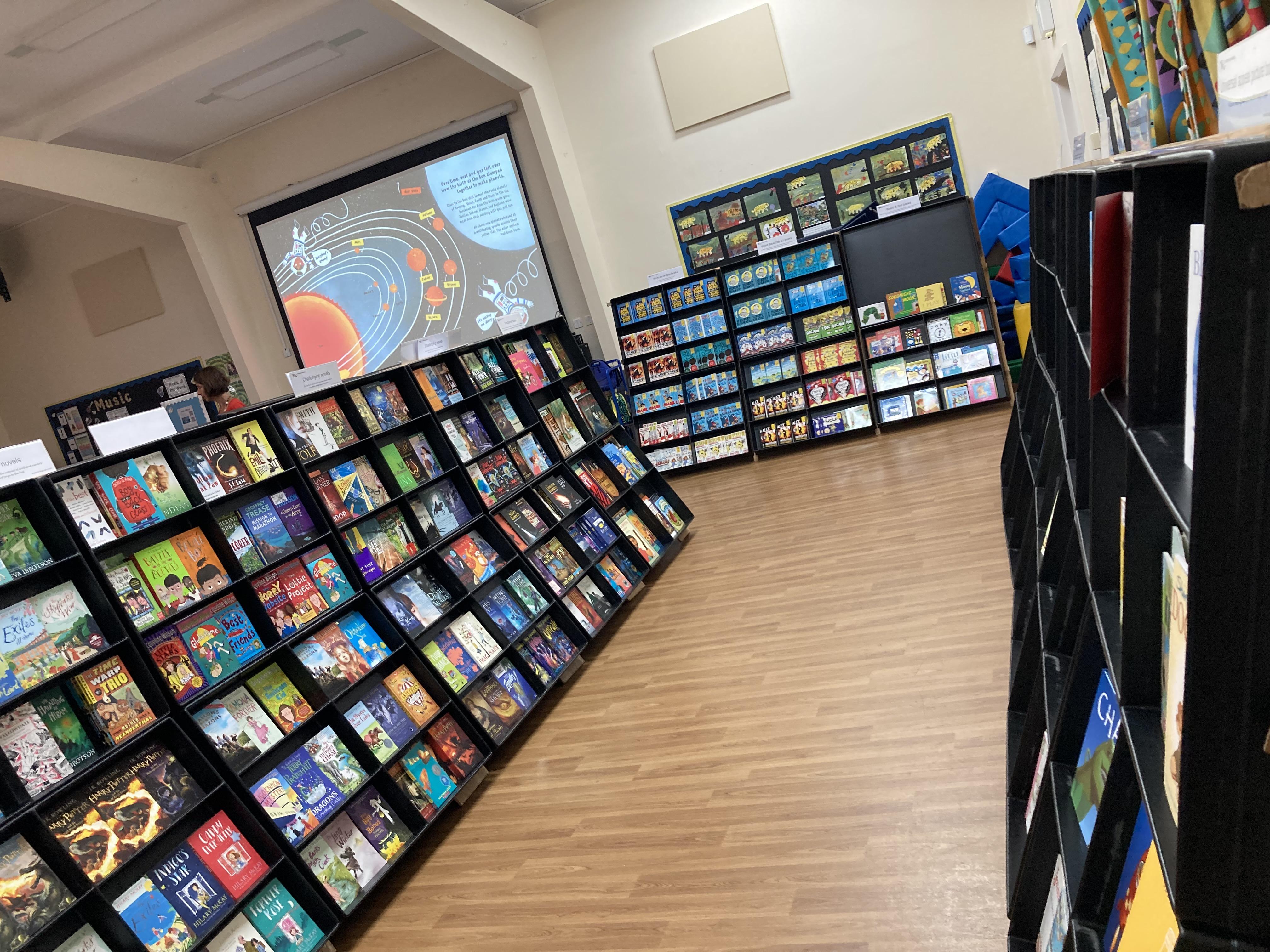
- Special events are planned throughout the year to encourage reading for pleasure. These include the annual participation in World Book Day, author and poet visits, bookshop annual visits.
- Every class participates in a daily class read session. The books are carefully chosen to ensure the children not only get the opportunity to appreciate our rich and varied literary heritage, but to also have the opportunity to read a range of texts from different authors.
- All pupils are expected to complete weekly home reading supported by their family with books being sent home daily. Home reading is tracked through monitoring of reading record books, with four times a week being the minimum amount of times children are expected to read a week. Additional reading support is provided for those unable to read at home, those who are struggling to progress or those who are entitled to additional support. This is done through a variety of ways, such as reading with the teacher/TA regularly as a focused reader or reading with a midday-supervisor or Literacy volunteer that we welcome in school. Extra intervention groups are set up during assembly times or in the afternoons and paired reading happens regularly in year groups and across phases.
- Time for independent reading is carefully planned for. Children have directed reading time every morning, where teachers help support and hear readers one to one. Every Friday, the whole school participates in 'Free Choice Friday', where children have choice led reading time. This involves children choosing what they would like to read and having the opportunity to read with others.
Writing
Our writing curriculum is carefully sequenced to build from early transcription skills to confident, purposeful composition. In the Early Years, the focus is on developing the foundations of writing through mark-making, letter formation and early transcription skills. In Year 1, pupils build on this by using a range of high-quality texts to inspire writing, developing the ability to construct simple sentences with increasing confidence and accuracy. From Year 2 to Year 6, writing is driven by rich, quality texts, with pupils exploring a wide range of genres. New genres are introduced progressively each year, while previously taught forms are revisited and refined to deepen understanding and improve quality. Grammar is taught both within the context of writing—so pupils can apply it meaningfully—and through a dedicated weekly lesson to ensure key skills are explicitly taught and embedded.
Handwriting
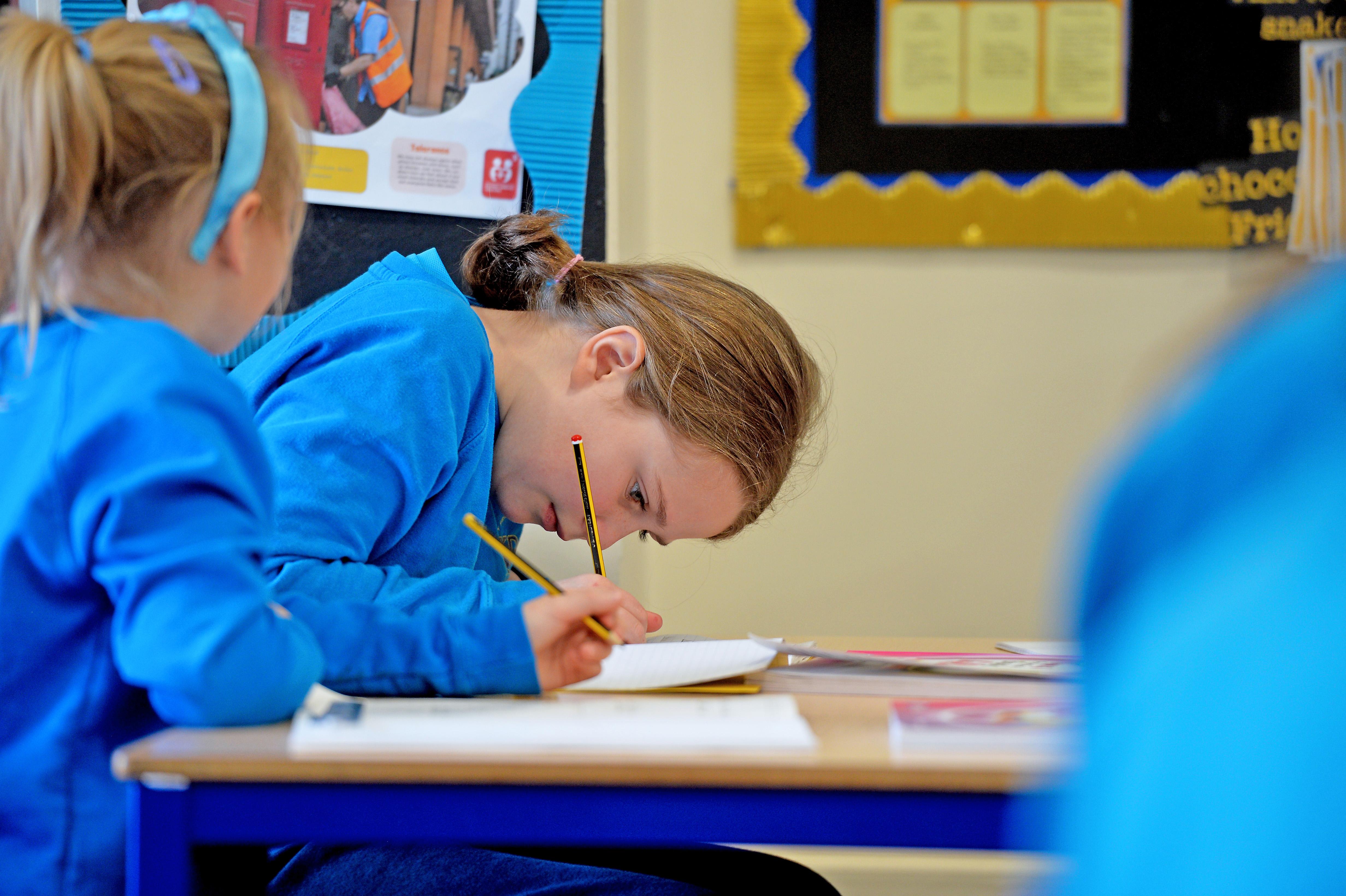
At Kimberley Primary and Nursery School, we believe that handwriting is integral to a child’s personal development and know that children’s engagement and self-esteem can be improved by their satisfaction and pride in good quality presentation. With this in mind, we use Penpals for Handwriting, which is a complete handwriting scheme for 3–11 year olds, offering clear progression through five developmental stages. It teaches children a fast and fluent handwriting style to help them achieve their potential in writing (see separate Handwriting policy for more information).
Impact
By the time children leave Kimberley Primary and Nursery School they are competent, lifelong readers and communicators. Attainment will be assessed using:
- Regular writing opportunities and some published pieces, which are completed by children throughout their writing units. Teachers must use this to assess the impact of the teaching.
- Regular phonics assessment.
- Whole school and family of schools reading/writing moderation.
- Teacher Assessment Frameworks and exemplification documents are used as a reference during the in-school moderation.
- Quality Assurance of reading and writing is completed by the English lead alongside class teachers during regular progress meetings.
- Monitoring is regularly carried out by SLT alongside the English Lead. This consists of learning walks, lesson observations, book scrutinies, planning scrutiny, pupil voice, and data analysis.
- Phonics Screening Check.
- KS2 SATS and moderated teacher writing assessment.
- Reading progress is measured through the use of the FFT Reading Assessment Programme.

Progression Documents